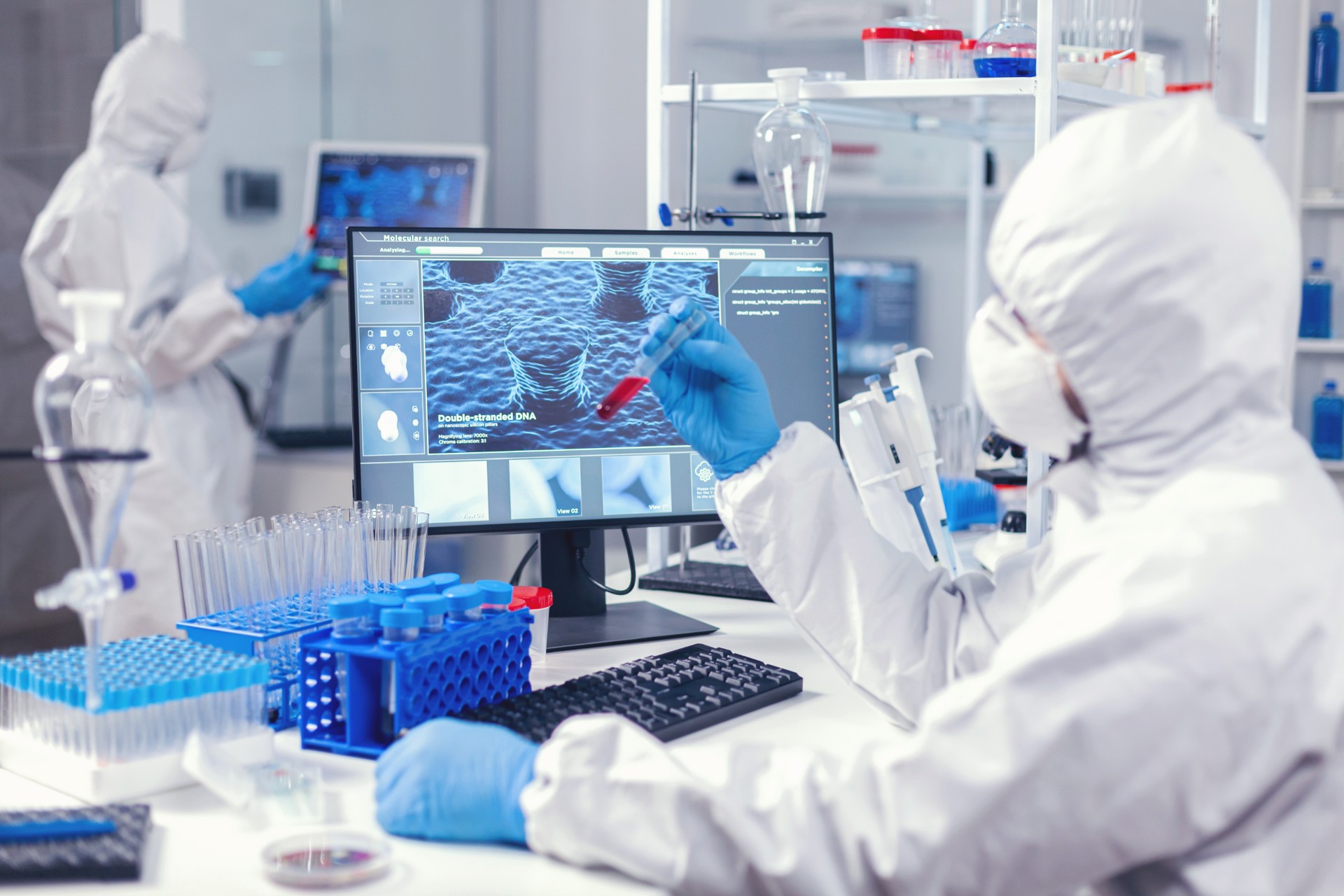
“Our laboratory serves to provide accurate, fast, and reliable diagnostic services with state-of-the-art equipment at the highest quality standards and an experienced team of specialist doctors and personnel to support patient care processes.”
TOBB ETU Faculty of Medicine Hospital Laboratory
Our laboratory performs comprehensive laboratory tests for the diagnosis of diseases, monitoring of treatment processes, and prevention of diseases. For this purpose, with our expert staff who closely follow technology and scientific innovations, we aim to contribute to health services with an ethical, patient-centered, and sensitive approach.
Our laboratory serves 24 hours a day, 7 days a week and consists of 12 departments. Tests performed in our laboratory go through quality control processes in accordance with modern medical requirements and national and international standards.
Samples come to our laboratory from inpatient floors, intensive care units, operating rooms, and outpatient clinics through the pneumatic tube system or healthcare support personnel. Samples whose suitability is evaluated in the sample acceptance department and whose laboratory records are taken through the hospital operating system are centrifuged if necessary and then distributed to the relevant departments within the laboratory.
All devices in the departments are connected to the hospital operating system. Thanks to these bidirectional systems, patient information and test requests are taken from the system and processed, and results are transferred to the relevant patient’s file.
Quality Assurance
The analysis of tests performed in our laboratory is carried out with the utmost precision by experienced laboratory personnel in automated systems belonging to internationally recognized companies. Results are approved after being checked by our specialist doctors and can be followed by requesting doctors through the hospital operating system. Patients can also follow their results from https://hastane.etu.edu.tr/ or e-nabız.
The performance of devices and materials used is monitored at every stage of the analysis processes. The accuracy, repeatability, and precision of all tests performed in our laboratory are monitored with daily or weekly internal quality control and nationally or internationally recognized external quality control programs (CAP, LabPT, KBUDEK, etc.).
A functioning quality process for laboratories both increases the reliability of the laboratory and ensures continuity of operations. Procedures, instructions, and forms related to the work done have been prepared and documented. The situations defined in these documents are known, applied, and renewed when necessary by all laboratory personnel.
Sample Collection Guidelines
For laboratory services, except in emergencies, it is recommended to give samples after 8-10 hours of fasting in the morning. Collected samples reach our laboratory within 30 minutes. Result delivery times for tests performed in the laboratory are predetermined.
» Emergency results are available within 1 hour when there are no technical problems
» Outpatient and ward samples are completed within 3 hours depending on processing time
» Special tests may require longer processing times
Laboratory Units and Services
Biochemistry Unit
In the biochemistry unit, many routine and specific tests in the protein, carbohydrate, lipid, enzyme, and electrolyte groups are performed fully automatically with state-of-the-art devices from blood, urine, cerebrospinal fluid, and other body fluids. Urine tests are also performed in an automatic urine analyzer, and macroscopic, microscopic, and biochemical analysis of urine is performed. These tests are especially important for evaluating metabolic status and kidney and liver functions.
Hematology Unit
In this unit, complete blood counts are performed with 22 or 35 parameter fully automatic blood counting systems, and peripheral smear preparations are evaluated by our experienced specialists.
Coagulation tests such as PT, aPTT, Fibrinogen, D-Dimer, FDP, etc., and sedimentation tests are also performed with automated devices in this unit and results are reported.
Microbiology Unit
In this unit, aerobic and anaerobic cultures are performed, isolated microorganisms are identified with automatic systems, and sensitivity tests are reported according to international criteria. In addition to mold and fungus microscopy and culture, antifungal sensitivity tests are also performed. Culture and antibiogram results are given within 24-48 hours. Specific diagnostic kits are used for parasitology tests to be completed correctly in the shortest time. Early diagnosis of infections is made by rapid tests for antigens of viral agents that cause respiratory and gastrointestinal infections.
» Spermogram Test:
Sperm counting and motility percentage are performed with automated devices. Sperm morphology is examined according to “Strict Kruger Criteria.” With the Swim-up technique used, quality sperm in semen are separated from other cell debris, and sperm is prepared for intrauterine insemination.
Serology Unit
In this unit, tests for the analysis of proteins found in body fluids (ASO, CRP, RF, immunoglobulins, complement, etc.) are performed with fully automatic devices. Additionally, hepatitis tests, tests determining pregnancy infections (TORCH group), HIV and HIV confirmation tests are performed.
Hormone Unit
In the hormone unit, pituitary, thyroid gland, parathyroid gland, adrenal gland, pancreas and fertility hormones, some vitamins (vitamin B12, Vit D, Folic acid), newborn screening tests, and pregnancy period screening tests (double and triple screening tests) are performed daily with fully automatic systems.
Tumor Markers
In this unit, markers used for screening, treatment, and prognosis follow-up of benign or malignant tumors of breast, ovary, gastrointestinal system, colon, lung, liver, pancreas, stomach, and other organs are tested.
Drug Levels
Many drug levels can be checked for monitoring the dosage of drugs used. Therapeutic drug monitoring helps ensure optimal medication effectiveness and safety.
Autoimmune Tests
Autoimmune screening tests used in the diagnosis and follow-up of rheumatic diseases are performed with fluorescence microscopy. When necessary, autoimmune panels are studied by immune blot method, and autoantibodies for these diseases are examined.
Allergy Unit
» IgE Sensitivity Testing:
IgE sensitivity formed against allergens exposed through respiration and various foods is examined by immune blot method, and information about the degree of sensitivity is provided.
» Food Sensitivity Test:
Additionally, the Food Sensitivity Test consisting of approximately 220 parameters is also performed in this unit by microarray method. With this test, IgG type antibodies formed against various foods that cause intolerance in the person are examined, and patients are followed up by dietitians with the results.
Blood Transfusion Center
In this unit, blood group determination is performed and Coombs tests for blood incompatibility are performed. Additionally, blood collection from donors and cross-match procedures are performed when necessary. Urgent blood needs are met from the Turkish Red Crescent Blood Center with which we have an agreement.
Pathology Unit
Our pathology laboratory is equipped with the latest technological innovations. In the laboratory where all kinds of tissue and cell examinations can be performed, the most accurate diagnosis can be reached in the shortest possible time with the help of special stains and immunohistochemical methods.
» Frozen Section:
With the existing frozen (frozen section) method, tissues taken while patients are in surgery can be examined within minutes, diagnosed, and the course of surgery can be directed.
» Liquid-Based Cytology:
The liquid-based cytology method, which is preferred in many countries in the world because it reduces the error rate, is routinely used in cytological examinations in our laboratory.
Point-of-Care Testing
Point-of-care tests are also performed throughout our hospital. These are blood gases and fingerstick blood sugar measurements. These systems are also connected to our laboratory, and results are automatically transferred to the patient’s file as soon as the measurement is made. They are monitored with internal and external quality control analyses.
Specialized and Genetic Testing
Genetic analyses and molecular tests performed in the diagnosis of hereditary diseases, genetic disorders, infections, and some cancer types, as well as rare tests that are not frequently requested, are performed in contracted external laboratories whose reliability is approved by national or international organizations.
Storage and Automation
Proper storage of all materials used in the laboratory is also controlled by automation. Materials that need to be kept at a certain temperature are placed in refrigerators, freezers, cold rooms, or incubators, and the temperatures of the devices are monitored from the main computer with the help of small transmitters placed inside them.