


Our Team
A short introduction to your team members and why their background should inspire potential clients’ confidence.
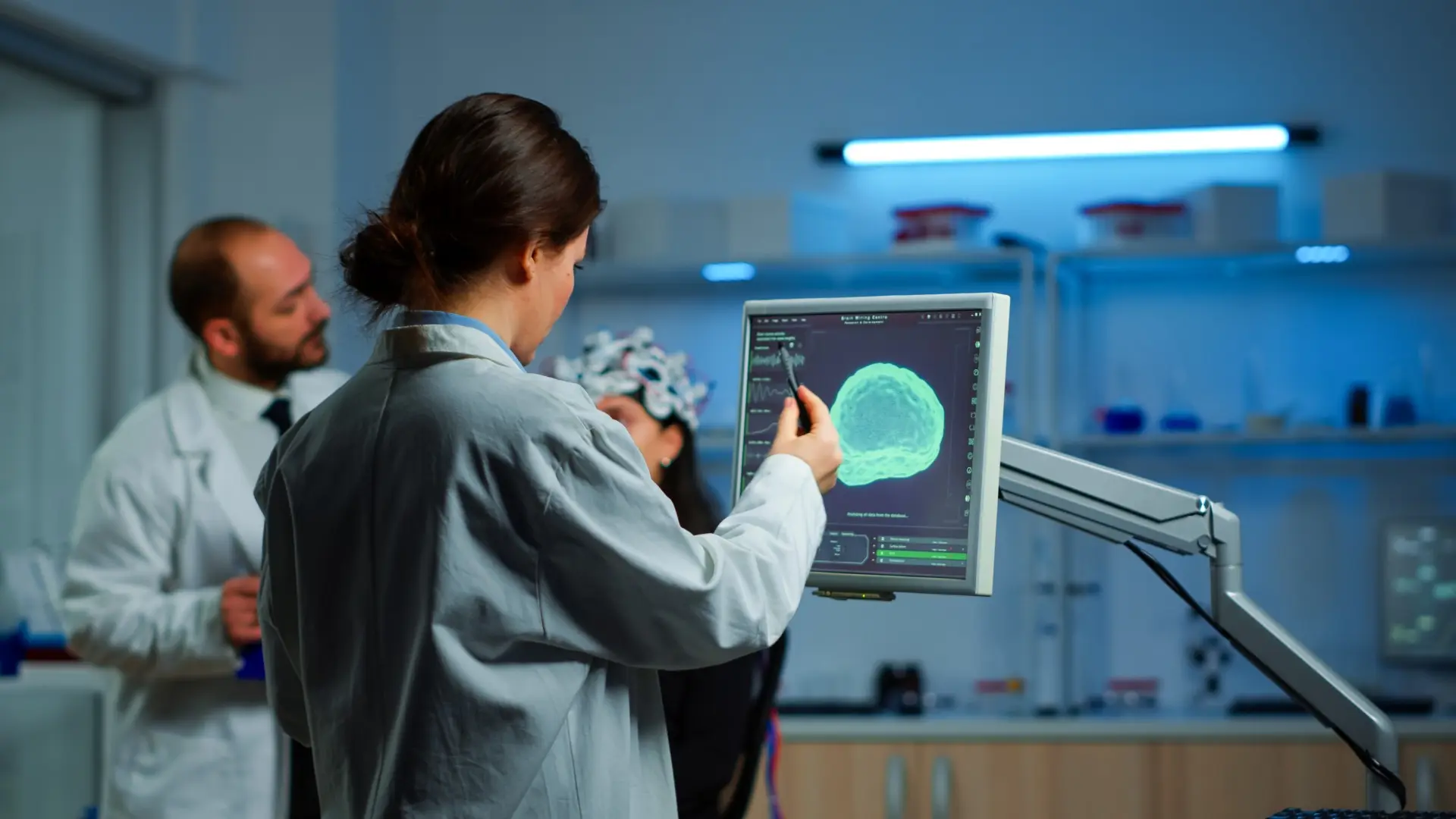
“Neurology is a branch of medical science that deals with the physiology and diseases of the nervous system. The nervous system consists of the brain, spinal cord, and peripheral nervous system. The treatment of diseases that develop in any of these three parts and do not require surgical intervention is performed by the neurology department.”
What Is Neurology?
Neurology is a branch of medical science that deals with the physiology and diseases of the nervous system. The nervous system consists of the brain, spinal cord, and peripheral nervous system. The diagnosis, follow-up, and treatment of diseases occurring in these three parts that do not require surgical intervention are carried out by neurology specialists. Neurology is divided into two separate branches: adult neurology and pediatric neurology. In our clinic, our specialists provide outpatient and inpatient treatment services, as well as intensive care services for conditions requiring intensive care follow-up.
What Diseases Does Neurology Treat?
» Cerebrovascular Diseases:
Cerebrovascular diseases include brain hemorrhages and cerebral vascular occlusions. Stroke, commonly known as paralysis, occurs when one of the brain vessels is blocked and that area of the brain cannot be nourished, manifesting in various neurological conditions. Cell death occurs in the areas supplied by the blocked vessel, and depending on the region, weakness on one side of the body, speech loss, dizziness, visual disturbances, and loss of consciousness may be observed. Neurology specialists use Magnetic Resonance Imaging (MRI) or Computed Tomography (CT) scans to identify the blocked vessel and affected area and arrange treatment. Apart from vascular occlusion, hypertension-related brain hemorrhages and venous hemorrhages due to venous occlusions are also among cerebrovascular diseases. The follow-up and treatment of brain hemorrhages that do not require surgical drainage are also performed by neurology specialists. Patients who develop loss of consciousness and require respiratory or cardiac support are treated in the intensive care unit, while patients who do not require intensive care support are treated in the clinic.
» Epilepsy:
Epilepsy, known as seizures among the public, is among the diseases followed by the neurology department. The most common type of epileptic seizure is generalized tonic-clonic seizures, which present with involuntary movements in the arms and legs, loss of consciousness, foaming at the mouth, and urinary incontinence. The primary diagnostic method used in epilepsy follow-up and treatment is EEG. Epilepsy can begin in childhood and, although rarely, can also occur in adulthood. In seizures occurring in adulthood, the person must consult a neurologist for necessary examinations. The primary tests to be performed are MRI and EEG. Epilepsy treatment is performed by neurology specialists using antiepileptic drugs. Both adult and pediatric EEG, and Sleep EEG when necessary, are performed at our hospital.
» Headache:
Headache is one of the most common complaints in our society. Among the types of headaches, migraine and tension-type headaches are the most frequent. Diagnosis is made according to the patient’s complaints and the type of headache. The diagnosis and treatment of headaches are performed by the neurology department. Treatment is usually arranged according to the patient’s history or, when deemed necessary by the neurologist, by using imaging methods such as MRI or CT.
» Dementia:
Although the most common cause of forgetfulness complaints at a young age is depression, the rate of dementia in society is gradually increasing due to the extension of human lifespan. The most common cause of dementia in advanced age is Alzheimer’s disease. Complaints that begin with forgetfulness progress with decreased cognitive activities, thought disorders, difficulty performing daily activities, refusal to eat, and social withdrawal. Apart from Alzheimer’s disease, dementia can also occur due to structural abnormalities in brain vessels. The follow-up and treatment of these diseases are performed by neurology specialists.
» Movement Disorders:
Movement disorders include diseases such as Parkinson’s disease (the most common), dystonia, essential tremor, dyskinesias, and restless leg syndrome. The diagnosis and treatment of Parkinson’s disease, characterized by trembling in the hands, involuntary movements, loss of facial expression, and gait disturbances, are performed by the neurology department. Apart from Parkinson’s disease, if you have complaints such as trembling in the hands, pendular swinging of the head, involuntary movements in the legs at night, or burning sensations, you can get rid of your complaints by consulting neurology departments for necessary treatments.
» Sleep Disorders:
With increasing stress sources, sleep disorders have become one of the most common health problems today. Pathologies such as snoring and sleep apnea (cessation of breathing during sleep) can disrupt the quality of your sleep at night, causing insufficient sleep and a constant feeling of fatigue. Polysomnography (sleep test), which must be performed in the evaluation of these conditions, can be done either at home or in a hospital setting. Sleep EEG, used both in sleep evaluation and in the diagnosis of some types of epilepsy, is also performed in the neurology department. CPAP, BPAP, and ASV titration, which are among the treatment options for snoring-related sleep disorders, are performed at our hospital. If you have snoring or sleep apnea noticed by your relatives, or if you have difficulty falling asleep or think you sleep excessively, do not neglect to make an appointment with the neurology department.
» Demyelinating Diseases:
Myelin is an insulating substance that covers nerve cells and is essential for the nervous system to continue functioning. Due to the loss of this substance, various neurological findings occur according to the functions of the nerve cells where the loss develops. The most common demyelinating disease is Multiple Sclerosis (MS). MS progresses in episodes called attacks. After attacks, complaints may decrease, disappear, or permanent damage may develop. Attack diagnosis is made by the presence of contrast-enhancing plaques observed on MRI, in addition to newly emerging neurological damage in the patient. Apart from attack treatment, there are various protective treatment options to prevent patients from having attacks. MS is a chronic disease, and its follow-up and treatment are performed by neurologists. Apart from MS, other rare demyelinating diseases such as neuromyelitis optica (NMO) and Devic’s disease also exist.
» Muscle Diseases:
Among muscle diseases, the most common autoimmune disease is Myasthenia Gravis, and the most common genetically transmitted disease is Duchenne Muscular Dystrophy. In these diseases, because there are disruptions in nerve-muscle transmission, muscle thinning, decreased muscle mass, and impaired muscle contraction are observed. Myasthenia Gravis most commonly affects the eye muscles. Drooping of the eyelid, visual disturbances and double vision due to weakness in eye muscles, difficulty chewing and swallowing, and in later stages, weakness in arm and leg muscles are observed. The diagnosis and treatment of these diseases are also performed by the neurology department.
In addition to these diseases, the diagnosis and treatment of conditions such as vertigo (dizziness), facial paralysis, facial pain, and diabetic nerve damage (diabetic polyneuropathy) are also performed by the neurology department.
Diagnostic Methods Used in Neurology
Neurology physicians deal with the diagnosis, follow-up, and treatment of a very wide group of diseases concerning all parts of the nervous system and nerve-muscle diseases. Tests that measure neural transmission and imaging methods are used in the diagnosis and follow-up of these diseases.
» Polysomnography (Sleep Test) (Hospital and Home):
The polysomnography test, also known as the sleep test, used in the diagnosis of sleep disorders, is performed both in the hospital and at home.
» EEG (Pediatric-Adult, Sleep-Wakefulness):
The EEG test, used in the diagnosis and follow-up of epilepsy and some other diseases, can be performed in children and adults.
» EMG (Pediatric-Adult):
Connections between nerves and between nerves and muscles are made through electrical transmission. Electromyography (EMG) is an electrophysiological test used to measure disorders in the connections between nerves and between nerves and muscles, and it is performed by neurology specialists. The most common areas of use are entrapment neuropathies such as Carpal Tunnel Syndrome, demonstration of nerve damage in lumbar and cervical disc herniations, demonstration of nerve-muscle transmission disorders in muscle diseases, facial paralysis, diabetic polyneuropathy, and the diagnosis and treatment of motor neuron diseases such as ALS or Guillain-Barré syndrome. To perform EMG, which is a complex test, long-term training is required.
» Evoked Potentials:
Tests such as SSEP (Somatosensory Evoked Potential), VEP (Visual Evoked Potential), and BERA (Brainstem Auditory Evoked Response), used in the diagnosis of some diseases, are performed by measuring the nervous system’s response to electrical current given from certain areas.
How Is a Neurological Examination Performed?
A neurological examination is performed to evaluate the patient’s nervous system status. This examination involves a systematic approach covering the patient’s motor functions, sensory systems, reflexes, and mental status. During the examination, the doctor evaluates the patient’s gait, balance ability, muscle strength, and reflexes. Additionally, cognitive functions such as memory and attention are examined, along with visual and auditory systems.
Treatment Process in Neurological Diseases
The treatment process for neurological diseases varies depending on the type and severity of the disease. Treatment usually consists of the following stages:
» Diagnosis:
Diagnosis is made through detailed evaluations based on disease symptoms and signs. Tests such as MRI, CT, EEG, and EMG are used in this process.
» Drug Treatment:
Most neurological diseases can be treated with medications. For example, antiepileptic drugs are used for epilepsy, while dopamine agonists may be preferred for Parkinson’s disease.
» Rehabilitation:
Some diseases may require physical therapy and rehabilitation processes. This is done to increase patients’ functional abilities and improve their quality of life.
» Follow-up and Control:
The treatment process continues with regular check-ups. After evaluating the patient’s condition, updates are made to the treatment plan if necessary.
Our Specialists





TOBB ETÜ Tıp Fakültesi Hastanesi
- Telefon
- +90 312 292 99 00
- Adres
- Beştepe Mah. Yaşam Cad. No:5
- 06560 Yenimahalle / Ankara
- info@tobbetuhastanesi.com.tr